
Modernizing Building Access: Core Elevator Technologies
Future-Proof Your Building with Premium Vertical Transportation Solutions
Vertical transportation solutions are the systems that move people and goods between different levels of a building. They work by using mechanisms like cables, hydraulics, or motors to lift and lower cabs or platforms safely and efficiently. By integrating these systems, you can navigate multi-story spaces with ease and save valuable time during your daily commute. Using them is as simple as pressing a button to get where you need to go.
Modernizing Building Access: Core Elevator Technologies
Modernizing building access hinges on replacing legacy relay logic with destination dispatch systems. This core elevator technology groups passengers by floor, reducing travel time and improving building access efficiency. Retrofitting with machine-room-less elevators also maximizes usable space, as all drive components fit within the shaft. For vertical transportation solutions, integrating IoT sensors enables predictive maintenance on door operators and brakes, minimizing unplanned downtime. Touchless call kiosks and biometric verifiers further modernize access, linking directly to the control system for secure, hands-free floor selection. Upgraded drives and regenerative drives capture energy, lowering operational costs while delivering smoother, quieter rides within the existing hoistway footprint.
Machine-room-less (MRL) lifts: space-saving efficiency
Machine-room-less (MRL) lifts achieve space-saving efficiency by integrating the drive system, controller, and motor directly into the hoistway, eliminating the need for a dedicated penthouse. This frees up valuable rooftop real estate for other uses and reduces building height constraints. They achieve this compaction without sacrificing ride quality, using permanent magnet gearless machines for smooth, quiet travel. The efficient design also cuts structural steel requirements and speeds up installation, making MRL systems an agile choice for modernizing existing buildings or maximizing usable floor area in new low-to-mid-rise projects.
High-speed traction elevators for skyscrapers
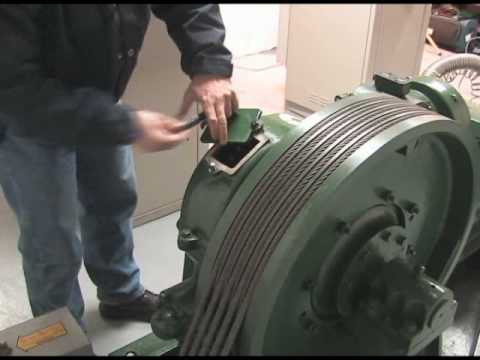
High-speed traction elevators for skyscrapers utilize advanced geared or gearless machines with permanent magnet motors to achieve travel speeds exceeding 10 m/s, minimizing wait times in tall buildings. Rope compensation systems and double-deck car configurations enhance efficiency by carrying more passengers per trip. Active roller guide shoes and aerodynamic car enclosures reduce wind noise and sway at high velocities, while regenerative drives convert braking energy into usable power. Destination dispatch algorithms group passengers by floor to optimize traffic flow, directly reducing journey times for users in dense high-rise environments.
High-speed traction elevators for skyscrapers combine powerful motors, aerodynamic cabins, and intelligent dispatching to deliver rapid, stable, and efficient vertical travel within ultra-tall structures.
Hydraulic systems for low-rise commercial settings
For low-rise commercial settings, hydraulic elevator systems offer a rugged and straightforward solution. They rely on a piston driven by fluid pressure, making them ideal for buildings up to five or six floors. You get a smooth, sturdy ride perfect for moving heavy loads like stock or equipment. The machinery is compact and can be installed without a massive overhead penthouse, saving valuable interior space.
- Ideal for moving heavy payloads like delivery carts or building materials.
- Requires less overhead space compared to traction systems.
- Provides a quiet, smooth ride at slower speeds for safety.
- Uses a simple, durable design that’s easy to maintain.
Smart Escalator and Moving Walkway Innovations
Smart escalator and moving walkway innovations directly enhance vertical transportation solutions by intelligently adapting to passenger flow and energy demands. These systems use sensors to detect approaching users, automatically transitioning from standby to operational speed, thereby reducing power consumption without sacrificing availability. Advanced control software synchronizes multiple units to optimize traffic distribution across a building’s vertical corridors, preventing bottlenecks at peak times. By precisely modulating speed and direction based on real-time load data, these walks and escalators offer a smoother, more responsive transit experience than traditional constant-speed models. Furthermore, integrated diagnostics predict maintenance needs, ensuring floor-to-floor mobility remains consistently reliable and efficient within the overall vertical transit network. This makes them a substantial upgrade for seamless pedestrian movement in dense urban environments.
Energy-regulating escalators with variable speed drives
Energy-regulating escalators with variable speed drives dynamically adjust motor speed based on real-time passenger demand. When no riders are detected, the system reduces speed to a low-energy standby mode, significantly cutting electricity consumption. Upon sensing an approaching passenger via presence sensors, the drive smoothly accelerates to full operational speed, eliminating unnecessary idling. This approach not only lowers energy costs but also reduces mechanical wear on components like chains and gears. Such systems are directly integrated into the escalator’s control architecture to optimize power use without compromising safety or comfort. The technology is particularly effective in low-traffic environments like transit stations.
Variable speed drives enable escalators to match energy draw precisely to traffic flow, making them a core component of smart, energy-regulating vertical transport.
Handrail sanitization and touchless activation
Modern smart escalators now integrate touchless activation and UV handrail sanitization as a standard user-safety feature. Instead of grabbing a potentially grimy moving belt, handrails are continuously bathed in UV-C light inside the unit, killing bacteria and viruses without slowing operation. You simply hover your hand near the entry sensor—no physical contact needed—and the system starts. How does the UV sanitation work without harming riders? The lamps are shielded inside the mechanism, so the light treats only the returning handrail loop before it reaches you, ensuring zero exposure to your skin.
Heavy-duty moving walks for transit hubs
Heavy-duty moving walks for transit hubs are engineered for high-frequency, continuous operation, typically featuring reinforced belt systems and corrosion-resistant frames. Their design prioritizes a larger pallet width and enhanced traction to safely accommodate passengers with luggage, strollers, and heavy rolling stock. These units operate at higher nominal speeds than standard commercial models to reduce transit times across long concourses. Integrated drive systems and robust braking mechanisms ensure smooth deceleration for passenger comfort. The walkway’s grade angle is typically minimal, remaining below 6 degrees for safe, wheelchair-accessible use without requiring a separate lift.
Selecting the Right Lift System for Your Project
Selecting the right lift system begins by assessing your building’s traffic flow and structural constraints. For high-rise projects, gearless traction elevators offer superior energy efficiency and speed, while low-rise buildings often benefit from hydraulic or machine-room-less (MRL) systems that reduce construction costs. Cabin capacity and door width must align with anticipated passenger or freight volume to prevent bottlenecks. Overlooking future building usage shifts, such as increased accessibility requirements, can lead to costly retrofits. Prioritize travel distance, shaft dimensions, and motor type early in planning to ensure the system integrates seamlessly with your building’s core structure and daily operation demands.
Capacity planning: passenger traffic calculations
Capacity planning for passenger traffic calculations hinges on determining the required handling capacity and interval. You must first estimate the peak five-minute traffic volume, typically a percentage of the building’s total population, then use this to calculate the necessary number and size of cars. Handling capacity is expressed as the number of persons the lift system can transport in five minutes, while the interval represents the average waiting time. These figures directly dictate lift speed, car capacity, and group configuration to prevent bottlenecks. Accurate traffic analysis ensures the system matches actual demand without oversizing, balancing service quality with cost-efficiency.
Destination dispatch versus conventional controls
For projects prioritizing efficiency, destination dispatch versus conventional controls presents a clear trade-off. Conventional controls send cars to floor EKCNE buttons after passengers board, which creates unpredictable stops and longer wait times. Destination dispatch, conversely, groups passengers by destination before they enter, sorting calls into fewer, more direct trips. This algorithmic pre-sorting reduces travel time by up to 30% in high-traffic buildings, though it demands intuitive lobby terminals for user adoption. For dense office or hotel towers, destination dispatch minimizes congestion. For low-rise residential or low-traffic settings, conventional controls remain simpler and cost-effective, avoiding unnecessary system complexity.
ADA compliance and accessibility requirements
When selecting a lift system, ADA compliance directly dictates essential design parameters, ensuring equal access for all users. You must verify that platform dimensions, control heights, and threshold gaps meet clearances for wheelchairs and mobility aids. Prioritize automatic emergency lowering and tactile buttons for visibility-impaired individuals. The system’s operational force and speed must align with ADA’s strict safety limits to prevent injury during boarding or egress. Q: What is the most overlooked ADA requirement in lift selection? A: Ensure the floor landing call station is unobstructed and reachable from a wheelchair—often blocked by clutter or poor layout planning.
Advanced Control Systems and Digitization
Advanced control systems in vertical transportation use real-time data from IoT sensors to optimize elevator group dispatching, reducing passenger wait times. Digitization enables predictive maintenance by analyzing motor vibration and door cycle patterns, automatically scheduling repairs before failures occur. Destination dispatch systems, a key digital innovation, assign passengers to specific cars based on floor requests, increasing handling capacity during peak traffic. Machine learning algorithms can adapt to evolving usage patterns in mixed-use buildings, but their effectiveness depends heavily on the quality of historical traffic data. Modern interfaces integrate with building management systems, allowing facility teams to remotely monitor car status and energy consumption via a single dashboard. This digital layer transforms elevators from isolated machines into responsive, data-driven components of the building’s overall infrastructure.
IoT-enabled predictive maintenance
IoT-enabled predictive maintenance in vertical transportation uses real-time sensor data from elevator motors, cables, and brakes to forecast component wear before failure. Real-time vibration analysis detects bearing degradation, while hydraulic pressure monitoring alerts to seal leaks. This shifts service from scheduled overhauls to condition-based interventions, reducing downtime in high-traffic buildings. The system autonomously adjusts maintenance schedules based on actual load cycles, not calendar intervals.
IoT-enabled predictive maintenance uses continuous sensor data to anticipate elevator component failures, allowing targeted interventions that prevent unplanned shutdowns.
Cloud-based fleet management dashboards
Cloud-based fleet management dashboards aggregate real-time performance data from an entire vertical transportation network into a single interface. Operators monitor car positions, door cycle counts, and traffic flow patterns to instantly identify bottlenecks or underperforming units. Predictive maintenance scheduling is triggered by analyzing vibration and motor temperature trends, reducing unplanned downtime. The dashboard dynamically adjusts dispatching logic based on live passenger demand, improving waiting times during peak hours. Access control logs integrate directly, allowing security teams to review elevator usage without separate systems. Historical data exports support long-term capacity planning for building management.
Cloud-based fleet management dashboards centralize live diagnostics, predictive maintenance triggers, and adaptive dispatching for entire elevator banks.

Biometric and keycard access integration
Biometric and keycard access integration within vertical transportation solutions replaces traditional call buttons with personalized authentication. This system matches a user’s biometric data—such as a fingerprint or iris scan—or their keycard credentials against a centralized database, instantly routing the elevator car to their pre-assigned floor. The integration relies on a unified controller that processes both inputs, ensuring seamless handoff between biometric readers and RFID keycard interfaces. Access permissions are verified in milliseconds, eliminating unauthorized floor stops and reducing wait times by grouping passengers with similar destinations. Biometric and keycard access integration thus enforces granular building security while optimizing traffic flow through predictive dispatch logic.
- Biometric readers and keycard pads must share the same control logic to avoid conflicting authorization protocols.
- Elevator controllers log every access attempt by biometric ID or card number for audit trail accuracy.
- Integration allows dynamic floor permissions, where a lost keycard can be instantly revoked via the biometric database.

Green Design and Energy Performance
Green design in vertical transportation prioritizes energy performance through regenerative drives that capture braking energy and feed it back to the building’s grid, reducing overall consumption. Practical steps include selecting high-efficiency permanent magnet motors and LED cabin lighting with motion sensors. Optimizing counterweight ratios to balance the cab and load minimizes motor strain, while standby modes that power down non-essential systems during low traffic further cut energy waste. Gearless traction machines also reduce mechanical friction. For existing installations, retrofitting variable frequency drives can lower energy use by up to 30%. Prioritize these features in lift specifications to directly improve operational efficiency and sustainability.
Regenerative drives that recapture power
Regenerative drives convert a descending elevator’s excess kinetic energy into electricity, feeding it back into the building’s power grid rather than dissipating it as heat. This recaptured power can reduce total lift energy consumption by up to 30% in high-traffic applications. The energy efficiency of regenerative drives is maximized when paired with variable-frequency control, as it allows precise modulation of the braking current. These drives require a compatible AC or DC bus to handle regenerated voltage, making retrofitting feasible only within modernized control architectures. Q: Do regenerative drives work during light loads? A: Yes, but recovery efficiency drops significantly below 40% rated load, as the net downward force may not generate sufficient torque for meaningful recapture.
LED cabin lighting and standby modes
Modern vertical transportation solutions integrate LED cabin lighting that shifts to low-intensity standby modes during idle periods, significantly reducing energy consumption while maintaining visibility. These systems often use motion sensors or elevator call detection to trigger full illumination only when passengers are present. A common feature is the gradual dimming to around 20% output, which prevents total darkness and enhances safety. Smart standby mode activation extends LED lifespan by minimizing on-off cycling and thermal stress.
Q: How does LED cabin lighting’s standby mode affect passenger comfort during long idle periods? A: It ensures minimal, non-intrusive illumination that avoids eye strain while signaling the elevator is ready, allowing a quick return to full brightness upon sensing motion.
Low-energy components for net-zero buildings
Low-energy components for net-zero buildings within vertical transportation solutions prioritize regenerative drives that capture and feed kinetic energy back into the building grid. Ultra-efficient permanent magnet synchronous motors minimize standby power loss, while LED cabin lighting and sleep-mode controllers further reduce parasitic loads. A clear sequence for integration includes:
- Selecting a regenerative drive system sized for the building’s peak braking energy capture.
- Specifying low-friction guide rails and optimized counterweight ratios to reduce traction demand.
- Implementing intelligent dispatching algorithms to consolidate trips and minimize motor starts.
These components collectively ensure the elevator system operates as a net energy contributor rather than a consumer, aligning with passive house performance targets.
Specialized Transport for Unique Environments
Specialized transport for unique environments tackles vertical movement where standard elevators fail, like in tight mineshafts or underwater habitats. Here, you often need custom-built lifts with sealed drives to resist corrosive saltwater or explosive dust, and cables are replaced with hydraulic or rack-and-pinion systems for reliability in extreme temps.
The real trick is not just lifting the load, but preventing the environment from destroying the machinery—so you might see traction machines with ceramic coatings or pressurized cabins that keep electronics safe from humidity or fine particles.
These solutions prioritize rugged simplicity, so maintenance crews can swap parts without needing a full factory shutdown.
Panoramic and glass-walled elevators for aesthetics
Panoramic and glass-walled elevators prioritize aesthetics by integrating transparent enclosures that transform vertical movement into a visual experience. These systems use structural glass panels and minimalistic framing to maximize sightlines, allowing passengers to observe surrounding architecture or landscapes without obstruction. A key engineering consideration is balancing transparency with thermal performance, often achieved through laminated or coated glass that reduces glare while maintaining clarity. For user appeal, panoramic elevator integration can enhance spatial perception within atriums or exterior facades, creating a dynamic link between floors. The design must account for load-bearing limits and cleaning access without compromising the sleek profile.
- Fully glazed cars require specialized light-diffusing coatings to prevent excessive heat buildup
- Magnetic levitation or cable-hung systems minimize visual clutter from mechanical components
- Interior transparency eliminates claustrophobic sensations in tall structures
Residential lifts with whisper-quiet motors
For unique home layouts where noise carries, whisper-quiet residential lifts are a game-changer. Their ultra-silent motors glide smoothly between floors, so you won’t wake a napping toddler or disturb a home office during a late-night trip. These lifts often use gearless traction or advanced hydraulic systems that eliminate the typical grinding and clanking. You get a peaceful ride that feels more like floating, ideal for open-plan living spaces or attached apartments where sound privacy matters. Maintenance stays low because the motor components face less vibration, keeping your daily vertical trips serene and seamless.
Industrial freight elevators with heavy load capacity
For facilities moving massive raw materials or finished goods, industrial freight elevators with heavy load capacity are the backbone of efficient vertical transport. These robust systems, often supporting tens of thousands of pounds, utilize reinforced steel carriages and powerful hydraulic or traction drives to handle oversized machinery and palletized cargo. Their deep, wide platforms accommodate forklifts directly, eliminating manual handling and reducing costly delays. Critical for warehouses or factories, they ensure that heavy, bulky items travel between floors safely and continuously, without disrupting production workflows. Unlike general freight lifts, these units feature advanced guide rails and braking systems to maintain stability under maximum payload, providing relentless service in demanding industrial environments.
Safety and Code Considerations
Vertical transportation solutions demand rigorous adherence to safety codes governing fall protection, load capacities, and emergency braking systems. Failure to comply with ASME A17.1 or EN 81 standards can introduce catastrophic risks, particularly in high-traffic or heavy-load scenarios. Enclosure interlocks must be fail-secure to prevent access to hazardous moving components, while speed governors and overspeed governors require routine calibration to match site-specific elevator or lift profiles. A nuanced point: Fire-code integration often overrides standard traffic-flow logic, demanding prioritized recall modes that conflict with energy-saving settings. Critical path inspections should verify that all car-top controls, pit ladders, and hoistway lighting meet current code minimums—overlooking these details creates liability for both installers and facility managers.
Modern safety brake and overspeed governor updates
Modern safety brake and overspeed governor updates now integrate digital overspeed detection with dual-channel electronic triggers. When a car exceeds nominal speed by a preset threshold, the governor instantaneously signals progressive wedge brakes to engage directly on the guide rails, not the gripper rope. This allows controlled deceleration rather than abrupt, jarring stops. The sequence is:
- Governor sensors detect overspeed via redundant encoder readings.
- Electronic actuator releases a friction-based caliper onto each rail.
- Mechanical over-centering locks the brake at standstill.
These updates eliminate manual reset requirements and enable smoother, shorter stopping distances in high-rise applications.
Fire-rated hoistways and emergency recall
Fire-rated hoistways enclose elevator shafts with materials rated to contain flames and smoke for a specified duration, preventing vertical fire spread. Emergency recall systems automatically return all elevators to a designated landing upon smoke detector activation, halting passenger use. This integration ensures that during a fire, the hoistway serves as a passive barrier while recall actively sequesters cars from affected floors. Without proper coordination, the hoistway’s fire rating can be compromised if recall fails to clear cars from fire-affected zones. Together, they form a dual safety layer: physical containment and operational lockdown.
Fire-rated hoistways contain fire; emergency recall withdraws elevators—both must function in sequence for occupant protection.
Routine inspection schedules and compliance checklists
Routine inspection schedules for vertical transportation solutions must adhere to manufacturer-recommended intervals, typically monthly for basic functionality and quarterly for safety components. Compliance checklists serve as the operational backbone, detailing every required check point—from door interlocks to governor mechanisms. Each checklist must be signed off by a trained technician and retained as evidence of due diligence. Periodic compliance verification ensures that every scheduled task is completed, preventing gaps that could lead to equipment failure. Adhering to these documented routines minimizes unexpected downtime and maintains operational integrity.
Routine inspection schedules and compliance checklists form a documented cycle that ensures vertical transportation solutions remain safe and reliable through systematic, verifiable checks.
Future Trends in Building Mobility
Walk into a future building, and you’ll find the elevator lobby is gone. Instead, you step onto a predictive destination dispatch platform that learns your daily routine, pre-calling a cabin before you even press a button. These vertical transportation solutions now use multi-car intelligent shaft systems, where several lightweight, autonomous pods share a single hoistway—eliminating waiting times entirely. As you ride, the cabin’s glass wall becomes an interactive display, showing you energy flow from regenerative drives that power the building itself. The system reroutes pods dynamically based on real-time foot traffic, so you never stop mid-floor. This is no longer just an elevator; it’s the building’s nervous system, adapting to your movement as naturally as walking.
Ropeless and multi-cabin elevator systems
Ropeless and multi-cabin elevator systems ditch the traditional cable for separate, self-propelled cars that move independently within a single shaft. This allows multiple cabins to travel in the same vertical loop, drastically increasing passenger capacity. You can call a cabin like a horizontal train, reducing wait times in tall buildings. These systems also use less space since a single hoistway handles double the traffic. The key benefit is uninterrupted vertical loop service, enabling both up and down cabins to pass each other without stopping.
Ropeless, multi-cabin systems move multiple independent cars in one shaft, boosting capacity and cutting wait times via a continuous, two-way loop.
AI-driven traffic flow optimization
AI-driven traffic flow optimization transforms vertical transportation by dynamically grouping passengers with similar destinations into a single car, drastically reducing wait times and energy use. Unlike fixed schedules, the system analyzes real-time demand patterns to predict peak traffic and pre-position idle elevators. This machine learning model continuously adapts, learning from call frequencies to refine dispatch logic, ensuring near-zero lobby congestion and smoother rides without guessing floor preferences.
Integration with smart building automation platforms
Integration with smart building automation platforms transforms vertical transportation into a responsive system. Elevators and escalators now synchronize with HVAC, lighting, and access control via APIs, optimizing energy use by powering down cars during low traffic. Predictive destination dispatch pairs with occupancy sensors to pre-position cars for peak flows, reducing wait times. This convergence requires open communication protocols like BACnet or MQTT to ensure interoperability across diverse OEM equipment. Q: How does this integration affect daily building operations? A: It allows facility managers to adjust vertical transport schedules dynamically—for example, prioritizing service to high-traffic floors after a meeting alert from the calendar system—without manual programming.